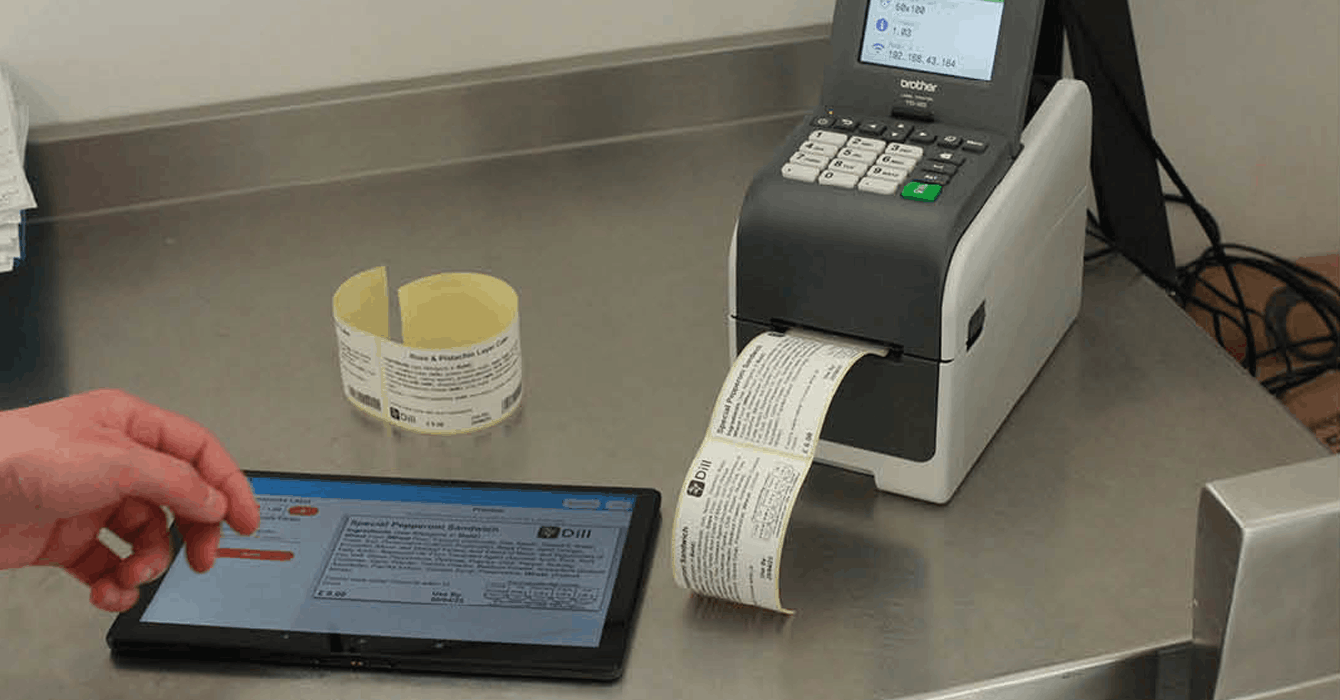
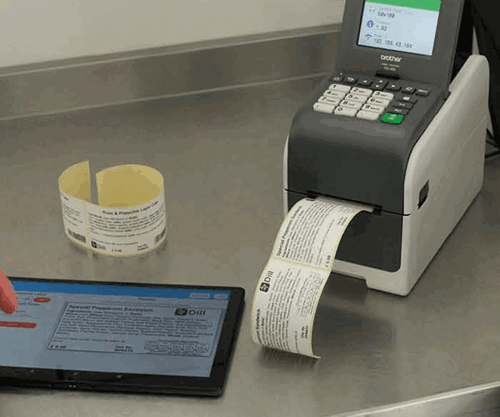
The results show up fast. At atis, moving labelling onto one connected system cut manual labelling time by 60% and reduced food waste through tighter stock rotation.
At patisserie group L’éclair, the same approach cut labelling errors by 80% and sped up production fivefold.
Compliant ingredient and allergen labels on L’éclair’s pre-packed boxes — part of a fivefold jump in production after moving to one system.
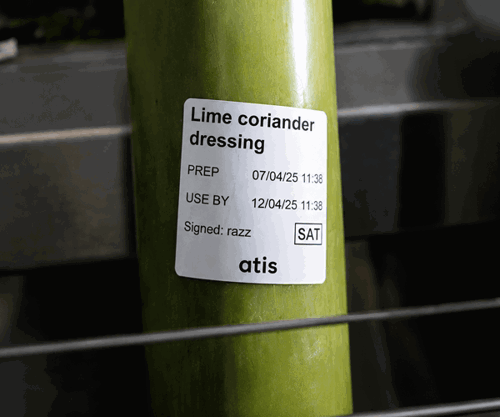
Day-dot stock rotation at atis: allergens, prep and use-by dates flow straight from the system to the label.
Compliance is where the stakes are highest, and the rules are tightening in both the UK and the United States. In the UK, Natasha’s Law already requires full ingredient and allergen labelling on food pre-packed for direct sale. In the US, New York has just passed the first state allergen-labelling law of its kind — effective November 2026, it requires top-nine allergen labelling on food packed on-site, and other states are following. On top of that, FSMA Rule 204 is pushing traceability requirements through food retail and service. When labelling data is already structured, connected and logged, compliance stops being a separate scramble and becomes a by-product of how the system already works.
The same infrastructure running UK forecourts, delis and bakeries is now live across North America — because the underlying problem is identical wherever food is prepped, labelled, dated and sold.
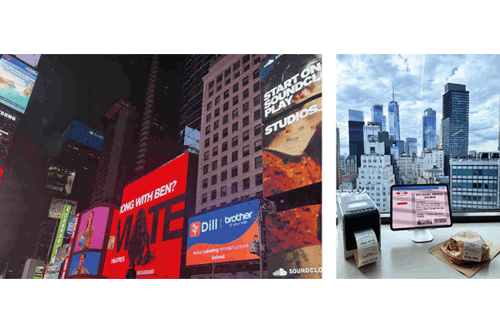
Dill x Brother in Times Square: retail labelling infrastructure, built for scale.
Live in New York: the same one-system workflow, ahead of the state’s 2026 allergen law.
Unlike legacy desktop-driven labelling systems, Dill runs mobile-first and cloud-managed across every site.
The operators who’ll feel easiest next few years are the ones who stop treating labelling as a stack of separate jobs — and start running it as one connected system that scales without changing shape.
Dill is bold labelling infrastructure for modern food operators — one connected system for stock rotation, Food to Go, edge-shelf design and print. Hardware by Brother.
The ats story (Brother UK): https://www.brother.co.uk/business-solutions/insights-hub/success-stories/food-hospitality/atis
Natasha’s Law: https://mydill.co.uk/ppds-pre-packed-for-direct-sale-natashas-law/
Stock rotation & food safety: mydill.co.uk/stock-rotation
Watch how Dill scales smart labelling across London: mydill.co.uk/scales
UK: www.mydill.co.uk | North America: www.mydill.com
YouTube: @dillfoodlabelling
LinkedIn: linkedin.com/company/dillapp